
.jpg?width=75&height=75&name=!--%20Column%202%20New%20to%20CityPickle%20%26%20Programs%20--div%20style=height%20100%25%3B%20display%20flex%3B%20flex-direction%20column%3B%20gap%2015px%3B!--%20New%20to%20CityPickle%20Card%20--%20div%20style=padding%2015px%3B%20border-radius%208px%3B%20border%201px%20(1).jpg)

.jpg?width=75&height=75&name=!--%20Column%202%20New%20to%20CityPickle%20%26%20Programs%20--div%20style=height%20100%25%3B%20display%20flex%3B%20flex-direction%20column%3B%20gap%2015px%3B!--%20New%20to%20CityPickle%20Card%20--%20div%20style=padding%2015px%3B%20border-radius%208px%3B%20border%201px%20(2).jpg)
.jpg?width=75&height=75&name=!--%20Column%202%20New%20to%20CityPickle%20%26%20Programs%20--div%20style=height%20100%25%3B%20display%20flex%3B%20flex-direction%20column%3B%20gap%2015px%3B!--%20New%20to%20CityPickle%20Card%20--%20div%20style=padding%2015px%3B%20border-radius%208px%3B%20border%201px%20(3).jpg)
.jpg?width=75&height=75&name=!--%20Column%202%20New%20to%20CityPickle%20%26%20Programs%20--div%20style=height%20100%25%3B%20display%20flex%3B%20flex-direction%20column%3B%20gap%2015px%3B!--%20New%20to%20CityPickle%20Card%20--%20div%20style=padding%2015px%3B%20border-radius%208px%3B%20border%201px%20(4).jpg)
.jpg?width=75&height=75&name=!--%20Column%202%20New%20to%20CityPickle%20%26%20Programs%20--div%20style=height%20100%25%3B%20display%20flex%3B%20flex-direction%20column%3B%20gap%2015px%3B!--%20New%20to%20CityPickle%20Card%20--%20div%20style=padding%2015px%3B%20border-radius%208px%3B%20border%201px%20(5).jpg)
.jpg?width=75&height=75&name=!--%20Column%202%20New%20to%20CityPickle%20%26%20Programs%20--div%20style=height%20100%25%3B%20display%20flex%3B%20flex-direction%20column%3B%20gap%2015px%3B!--%20New%20to%20CityPickle%20Card%20--%20div%20style=padding%2015px%3B%20border-radius%208px%3B%20border%201px%20(6).jpg)
.jpg?width=75&height=75&name=!--%20Column%202%20New%20to%20CityPickle%20%26%20Programs%20--div%20style=height%20100%25%3B%20display%20flex%3B%20flex-direction%20column%3B%20gap%2015px%3B!--%20New%20to%20CityPickle%20Card%20--%20div%20style=padding%2015px%3B%20border-radius%208px%3B%20border%201px%20(7).jpg)
 CityPickle
Live on TV: Highlights from National Pickleball Day
We had a blast celebrating National Pickleball Day and were thrilled to see CityPickle in the media spotlight. Here are a few special moments from...
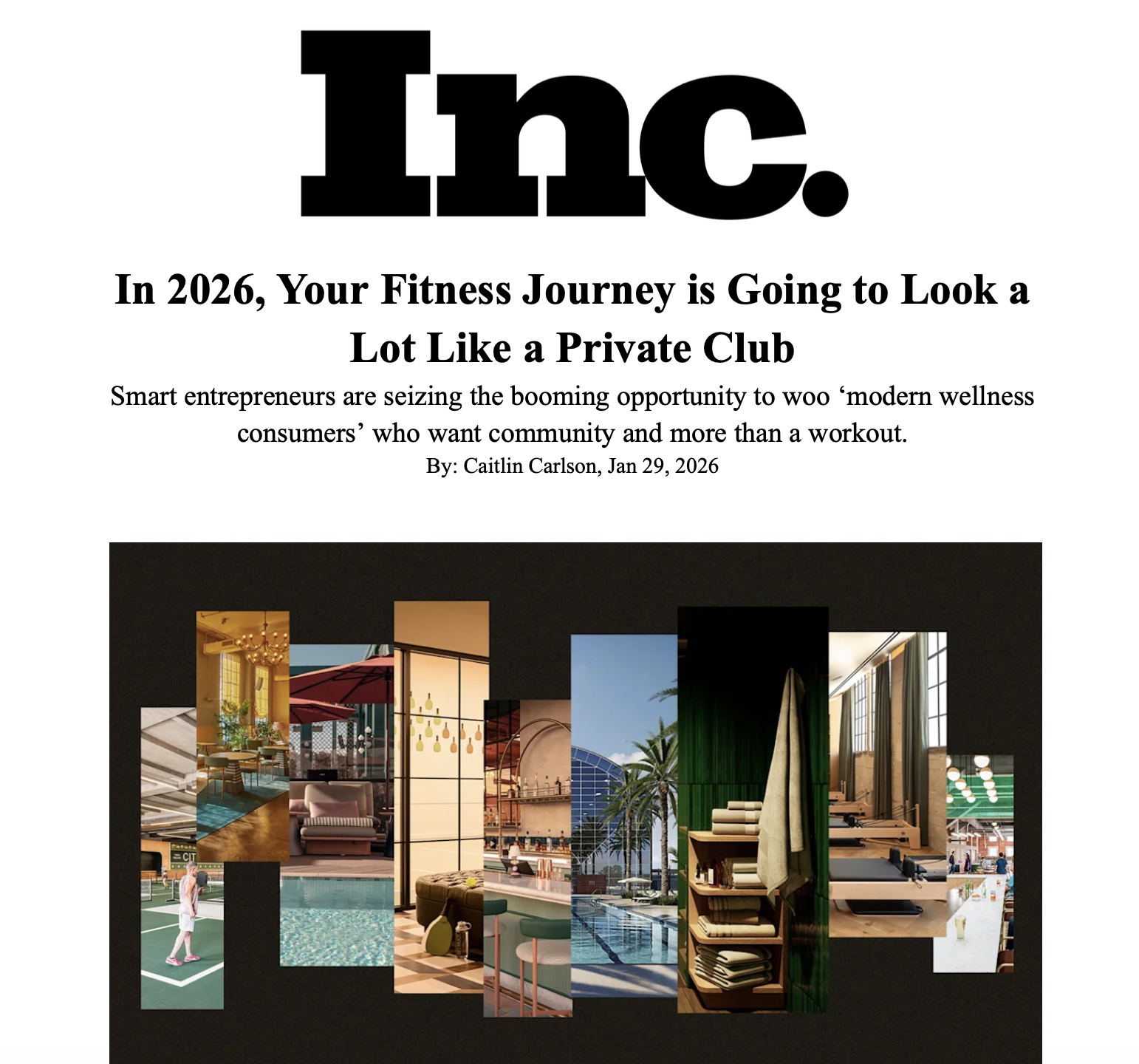
We are thrilled to be featured in Inc. as one of the latest fitness clubs giving you the private club experience. Read the whole article below:
In 2026, Your Fitness Journey is Going to Look a Lot Like a Private Club
Smart entrepreneurs are seizing the booming opportunity to woo ‘modern wellness consumers’ who want community and more than a workout.
By: Caitlin Carlson, Jan 29, 2026

There was a time when you would check into your gym, grind out a workout, and then—perhaps after a sub-par shower in the locker room—head into the office. After work, you’d meet friends at a bar or restaurant before heading home.
Today, your day may look a little more like this: At 7 a.m., you check into your gym. After a workout (maybe a Pilates class or game of pickleball?) you sit in the sauna before getting ready in a private shower suite. You grab a smoothie at the cafe, then head upstairs and find a desk in the co-working space. At lunch, you eat a gourmet meal in the club’s restaurant with a potential business prospect. Then, it’s a few more hours of work—perhaps you record a podcast episode in an acoustically optimized room—before grabbing a glass of wine or a mocktail with friends in the piano lounge. Only then do you leave the club, only to return the next day for some variation of the same.
Whether you live in New York, Los Angeles, or somewhere in between, fitness clubs with a luxury club-like flair are proliferating—and are expected to continue to boom in 2026 and beyond.
This trend, which has grown in the past few years, has provided ample opportunities for smart entrepreneurs looking to capitalize on the shift in consumer behavior. Upstart companies, like Moss, “a new and inspired kind of members club” in New York City that opened in late 2025 and CityPickle, a luxury pickleball club that opened its first location in 2023—as well as legacy brands, like the 34-year-old, publicly traded high-end gym Life Time—are finding growth opportunities with luxury customers, even amid economic uncertainty.
From Fitness-Focused Gym to Private Lifestyle Club
Since 2019, the number of Americans paying $100 or more per month for a fitness membership has increased by 77 percent, rising from just over 8 million to nearly 15 million members, according to data from the Health & Fitness Association. Meanwhile, membership among those paying $100-$199 per month grew at an annual rate of 11 percent, while the $200+ segment expanded by 14 percent annually. “What’s driving this is a growing bifurcation of consumers who are increasingly choosing either premium, experience-driven clubs or highly affordable,value-oriented gyms,” explains Anton Severin, vice president of research at the Health & Fitness Association.
Also fueling this trend is the fact that consumers have an expanded view of fitness, which is more inclusive of mental health, recovery, longevity, and general well-being. “What the premium clubs are trying to capture is this new emerging identity of the modern wellness consumers,” adds Joe Vennare, co-founder of Fitt Insider.
Moss, which opened in December, was in part inspired by London’s exclusive private haunts, says co-founder and president Colleen Brooks, a serial entrepreneur who previously co-founded Highcourt Leisure Club, a luxury club in New York City which never came to life due to the pandemic. With Moss, Brooks has brought her vision for a wellness-focused membership space to life in New York’s midtown neighborhood.
Fitness is at the foundation of the club—literally. The bottom two floors of the five-story club is “Bedrock,” 20,000 square feet dedicated to exercise, wellness, recovery, and restoration, featuring a sauna, plunge pools, spa, and a hammam. In addition to a full suite of cardio and strength training machines, personal training is available with NYU-certified trainers as well as reformer Pilates classes and dedicated workshops for mastering inversions, for example, and marathon training programs. The company declined to share its revenue.
“[Instead of] having a gym at the end of a hallway of a club, [we said] what if it had equal attention from us and members could spend their time equally on both intelligent leisure and physical culture?” Brooks says. While members can belong to just Moss or Bedrock, more than 70 percent of members have access to both offerings.
Evolving views of fitness also include an increased emphasis on community building and socialization—hence Moss’s strict no-phone policy.
For Mary Cannon, who co-founded CityPickle with her friend Erica Desai, community is a critical part of her business’s core value proposition. “We think of ourselves as a hospitality company that helps people connect on and off the courts,” says Cannon. Private phone booths are available on the properties for Zoom calls in between games, too. The company has seen a 120 percent increase in memberships since March 2025 at CityPickle as a proof point. This year, the company is expanding its real estate by more than 200k square feet. CityPickle declined to share its revenue. Per PitchBook, it has raised more than $10 million to date.
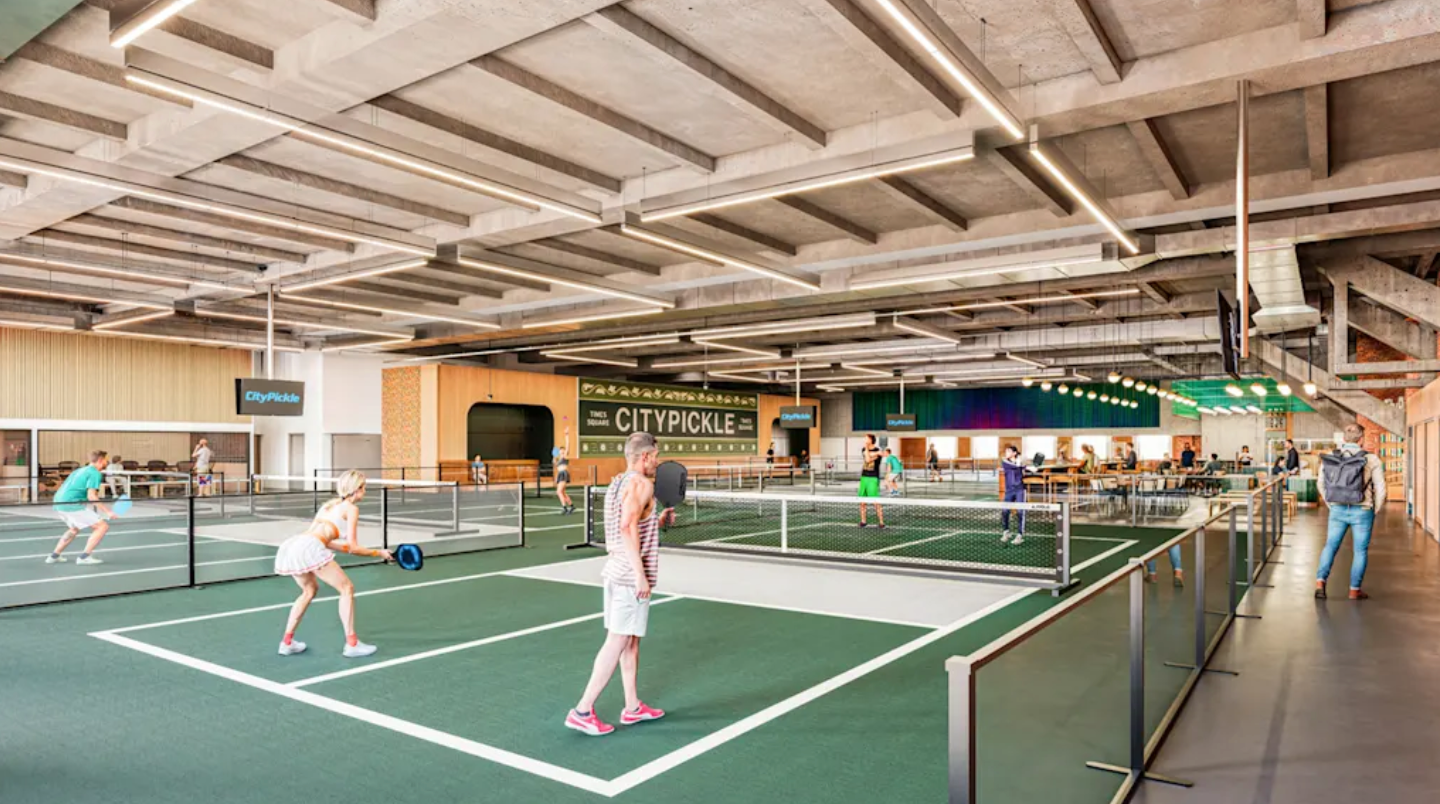
Across the country in Los Angeles, Heimat, a 75,000-square-foot club that opened in 2022, operates with a similar ethos. Rainer Schaller, the late founder of RSG Group, which owns Gold’s Gym, established the company as his 20th fitness brand before his death in a plane crash later that year.
Schaller’s vision for the brand was to curate a community-oriented space rooted in fitness. “By establishing Heimat as a private membership club rooted in fitness, we were able to create an ecosystem that supports the whole person, where physical well-being lives alongside work, social, and mental well-being,” says managing director Eleanor Bernstein. “This approach allowed us to build deeper, more enduring relationships than a traditional gym model ever could.”
Heimat members have access to a full-service spa as well as a Himalayan salt dry sauna, meditation room, private training in boxing, Pilates, and yoga, a rooftop pool, community workspace, and educational programming like financial planning and personal development workshops. While exclusivity is not the goal in itself, intentionality is, Bernstein says. “The private membership model allows us to maintain quality, service, and a strong sense of culture.”
Bernstein says that while traditional gym member lifespans average around eight months, Heimat’s average member lifespan is 18 months—and they’re spending significant time in the club per visit. “This reflects that Heimat functions as a true ‘third space,’ which was always the intention,” Bernstein says. The company declined to share its revenue.
What Luxury Gym Offerings Look Like in 2026
While Heimat and Moss are lifestyle clubs with serious fitness offerings, luxury gyms are starting to look more like lifestyle clubs—and they’re popping up outside of major metropolises and in the suburbs, too.
While Life Time considers itself the OG third space in the fitness industry, dating back to the opening of its first club in 1994, the company began marketing their gyms as “athletic country clubs,” post-COVID after hearing members compare the spaces to country clubs. “The whole concept behind starting Life Time was ‘what if we built a club, not a gym?” says Parham Javahari, Life Time EVP, President of Club Operations and Chief of Property Development. Life Time, which went public in 2021, now operates more than 185 clubs across the U.S. and Canada. Founder Bahram Akradi, who serves as chairman and CEO, has led the company for more than 30 years.
Life Time—originally called “Life Time Fitness”—dropped the latter part of its name in 2017 asit started to expand its offerings into co-working and community spaces. In the past couple of years, the company added work lounges into over a hundred clubs, cold plunges into over 80 clubs, and every club now has a recovery area with the NormaTec boots. The company is rolling out Miora medical clinics that offer advanced lab testing and access to GLP-1s and hormone therapy. Life Time also has the most pickleball courts in the country, according to Javaheri, almost 1,000.
“We’re always also looking at the social aspect and the athletic social aspect,” says Javeri. Life Time’s retention is higher than ever, he adds. The company’s total revenue is estimated to have increased 14.2 percent year-over-year from 2025 to 2026, to around $2.99 billion. The company has a $6.4 billion market cap.
What’s Working for—and Against—This Model
From a business model point of view, club-model fitness makes sense, Vennare says. Making avenue “exclusive” with only so many memberships available—and knowing that if you hit that cap, you’re making a specific amount of revenue, can be helpful.
Still, the private club model is not without its challenges. “These facilities tend to be capital-intensive, operationally complex, and work best in dense, higher-income markets,” Severin says. “The brands most likely to succeed are those that offer clear value beyond fitness while still delivering a core, high-quality experience.”
Another challenge is competition from cheaper offerings, including free local run clubs that also provide opportunities to socialize with like-minded people, Vennare says, and those HVLP clubs that are also thriving. “Third spaces aren’t replacing traditional gyms but rather expanding the top end of the market for consumers who want and can afford a more immersive lifestyle offering,” Severin underscores. “But for the population that has the money and aspires to the status, there will continue to be a demand for this,” Vennare believes.
Ultimately, the difference between success and failure for these clubs will be whether or not they can actually deliver on making people feel better, mentally and physically, Vennare says. “That's what wellness clubs are starting to wake up to,” he says—that they have to help people achieve a higher quality of life, to leave feeling better than when they arrived. And if that can be proven?“ The types of people that will belong to these clubs, they’ll pay anything,” Vennare says.
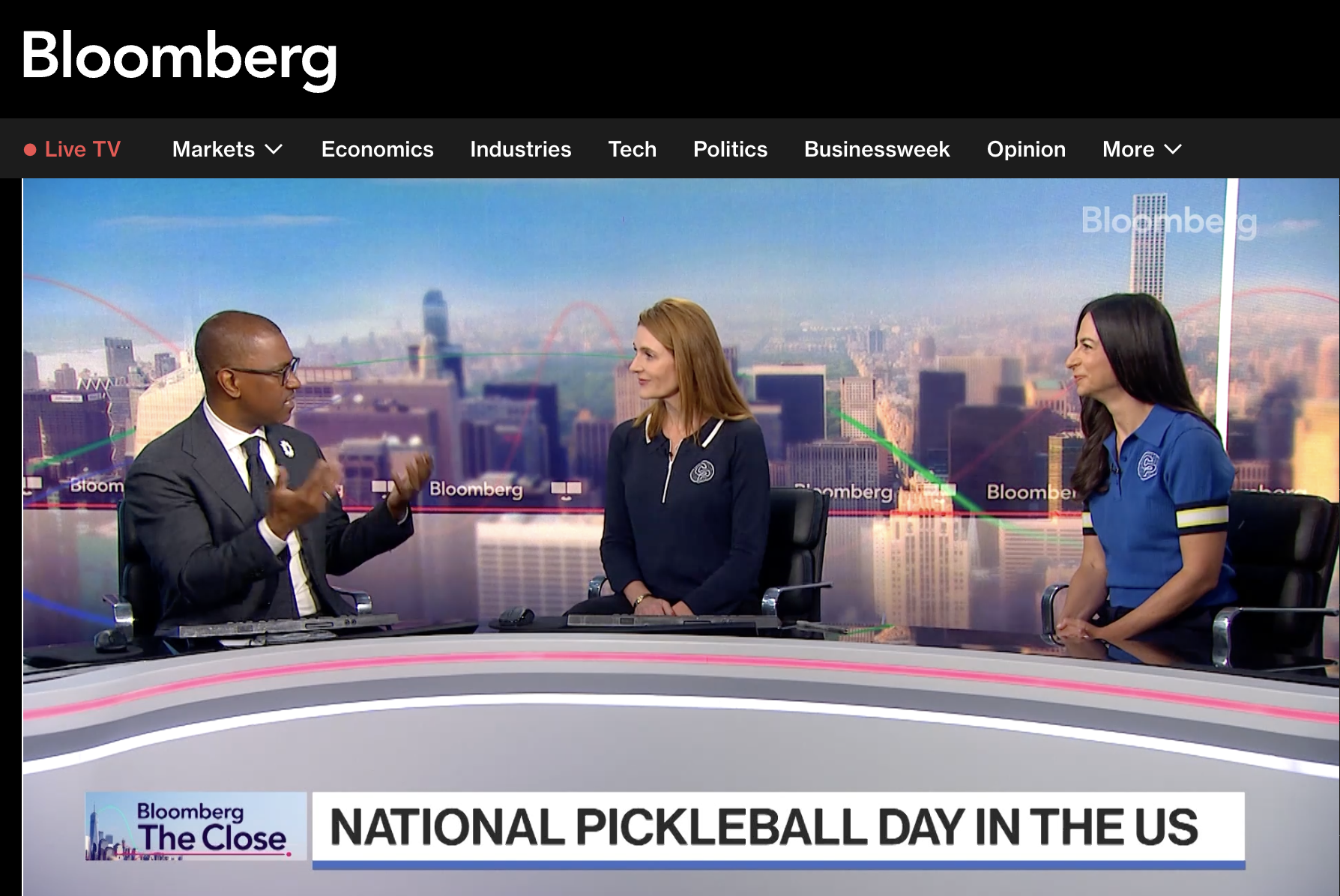
We had a blast celebrating National Pickleball Day and were thrilled to see CityPickle in the media spotlight. Here are a few special moments from...
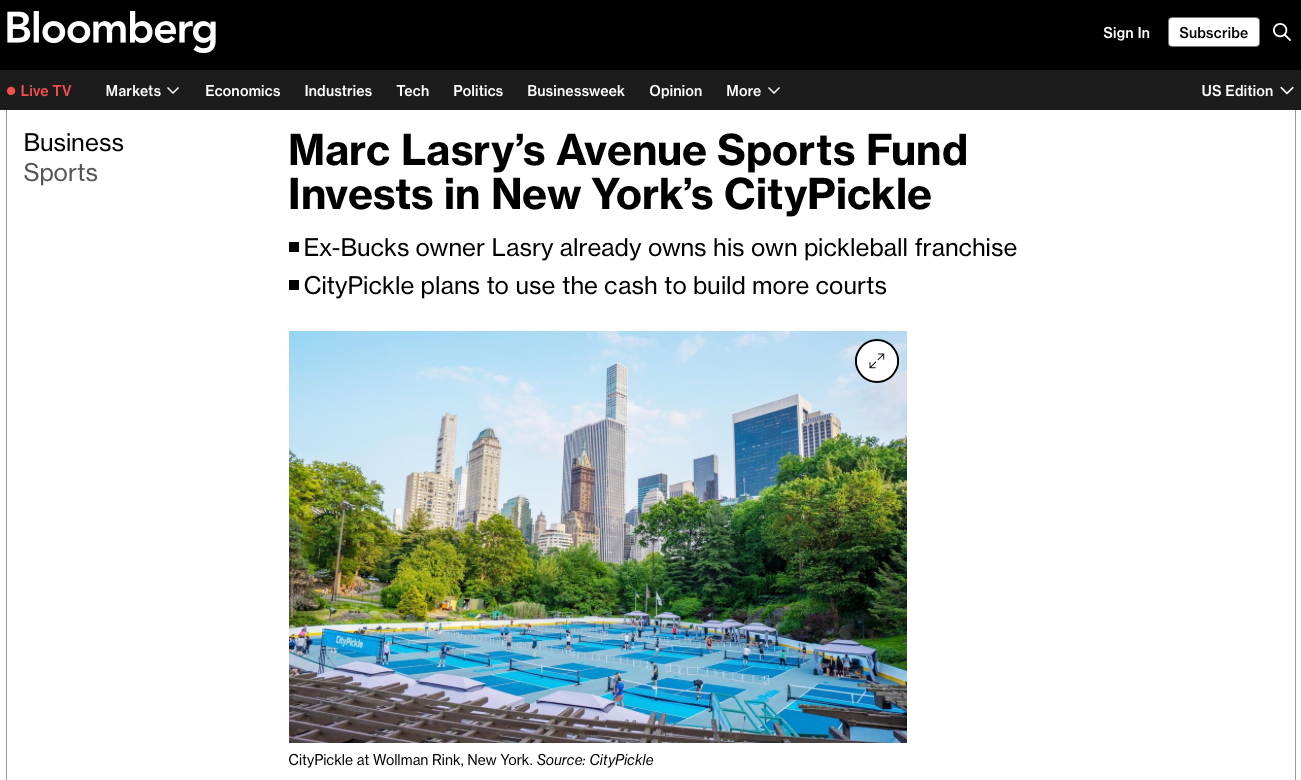
The pickleball craze isn’t slowing down. Marc Lasry’s Avenue Sports Fund has purchased a minority stake in CityPickle, a New York-based court...
-1.png)
Fast Company is taking notice of pickleball’s meteoric rise—and CityPickle’s undeniable role in shaping the sport’s future in New York City. With...